
Chicken carcass stock is an easy way to turn leftover roasted chicken bones into a flavorful homemade cooking base. By simmering the carcass with vegetables, herbs, and water, you can make a useful stock for soups, rice, gravy, sauces, and stews.
This guide explains what you need, how to simmer the stock, how to store it safely, and how to use it in everyday meals. The method is simple, inexpensive, and a practical way to make better use of leftover chicken.
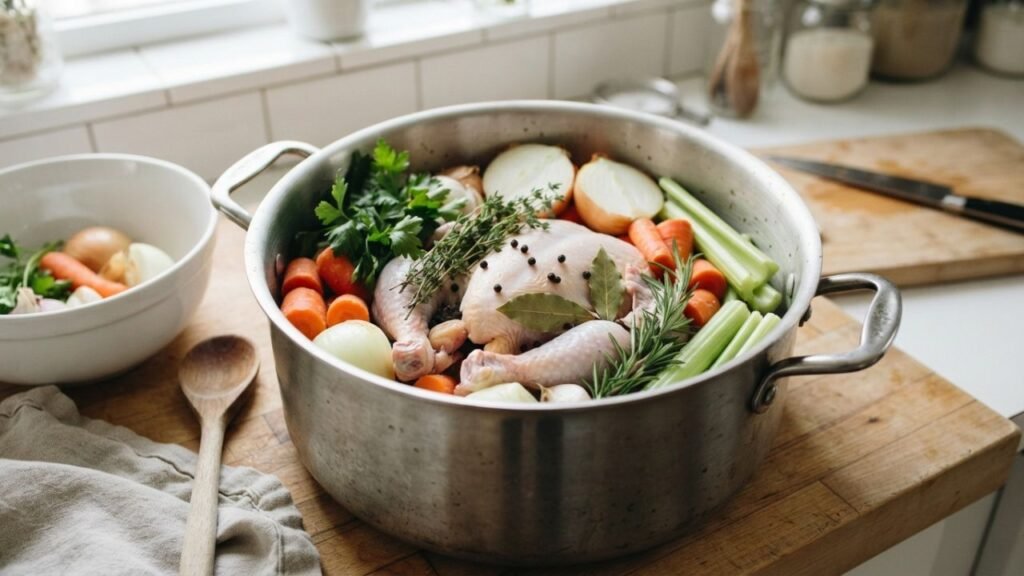
Chicken Carcass Stock
Chicken carcass stock is made by slowly cooking the bones, skin, connective tissue, and small pieces of meat left on a cooked chicken. Onion, carrot, celery, herbs, and peppercorns add extra flavor without making the stock too strongly seasoned.
| Prep Time | Cook Time | Total Time | Yield |
|---|---|---|---|
| 10 minutes | 3–4 hours | About 4 hours | 6–8 cups |
Ingredients
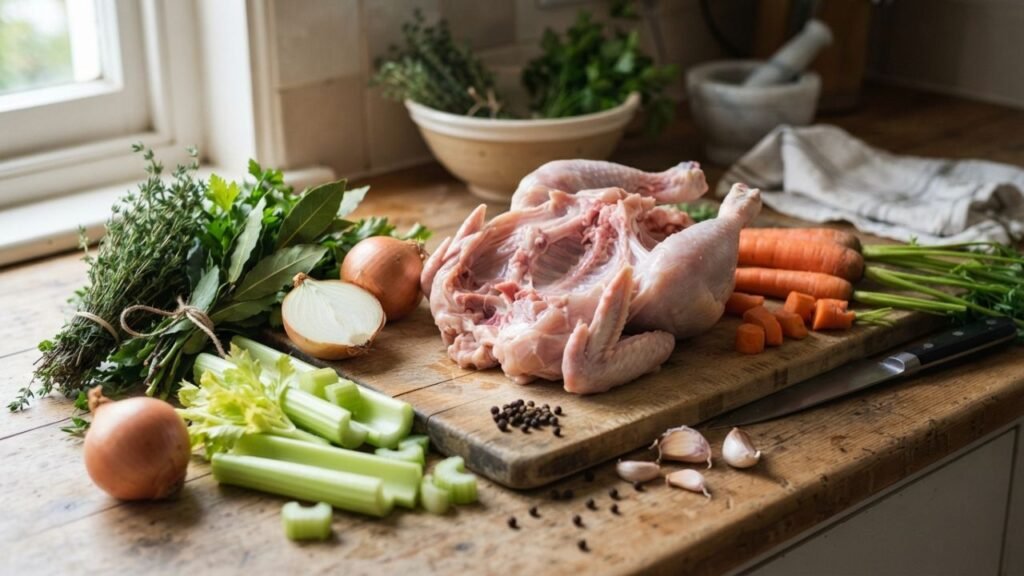
- 1 cooked chicken carcass
- 1 onion, roughly chopped
- 1 carrot, roughly chopped
- 1–2 celery stalks, chopped
- 1–2 bay leaves
- 1 teaspoon black peppercorns
- A few parsley stems or a small amount of thyme
- Cold water, enough to cover the ingredients
Optional additions include a garlic clove, leek, or leftover herb stems.
Ingredient Alternatives
| Ingredient | Alternative |
|---|---|
| Celery | Leek |
| Fresh parsley | Parsley stems or a small amount of dried parsley |
| Fresh thyme | Dried thyme |
| Black peppercorns | A small amount of ground black pepper |
| Onion | Leek or shallot |
| Carrot | Clean carrot ends |
Save clean vegetable trimmings and herb stems in the freezer if you regularly make homemade stock.
Step-by-Step Cooking Method
Step 1
Place the chicken carcass in a large stockpot and remove any large pieces of meat you want to save for another meal. Leave small pieces of meat, skin, and connective tissue attached because they add flavor and body to the stock. For safe handling and storage of leftover poultry, follow the USDA’s :Keep Food Safe! Food Safety Basics guidance.
Step 2
Add the chopped onion, carrot, celery, bay leaves, peppercorns, and herbs to the pot. Pour in enough cold water to cover the carcass and vegetables, leaving some space at the top of the pot.
Step 3
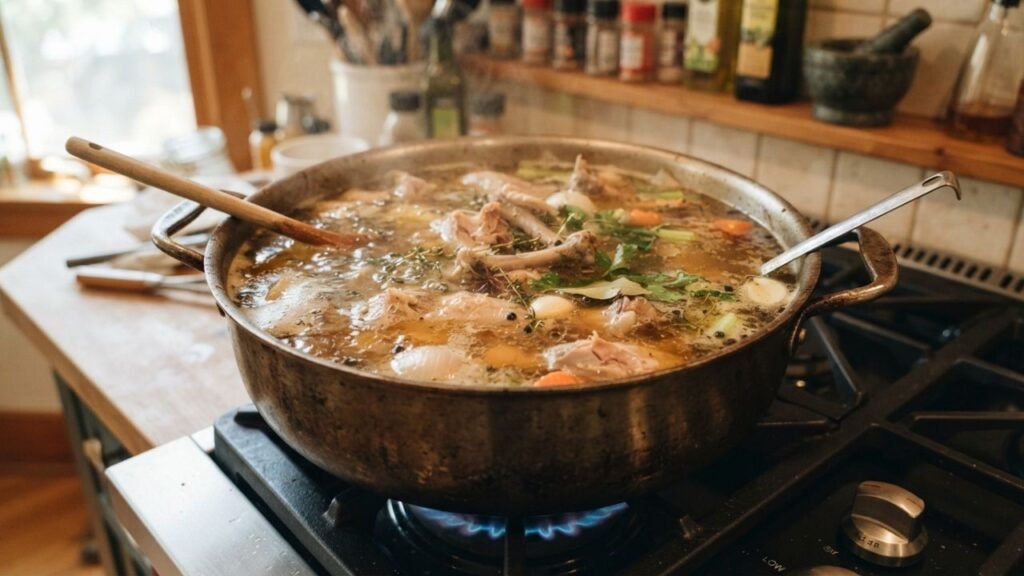
Set the pot over medium heat and slowly bring the water to a gentle simmer. Once small bubbles appear, reduce the heat and keep the liquid moving gently rather than allowing it to reach a rapid boil.
Step 4
As the stock begins cooking, foam or excess fat may rise to the surface. Use a spoon or skimmer to remove the larger amounts, which can help give the finished stock a cleaner appearance.
Step 5
Let the stock simmer gently for 3–4 hours, checking the pot from time to time. Keep the ingredients mostly covered with water and add a little more if the liquid reduces too much. The stock is ready when it has a rich aroma, deeper color, and developed chicken flavor.
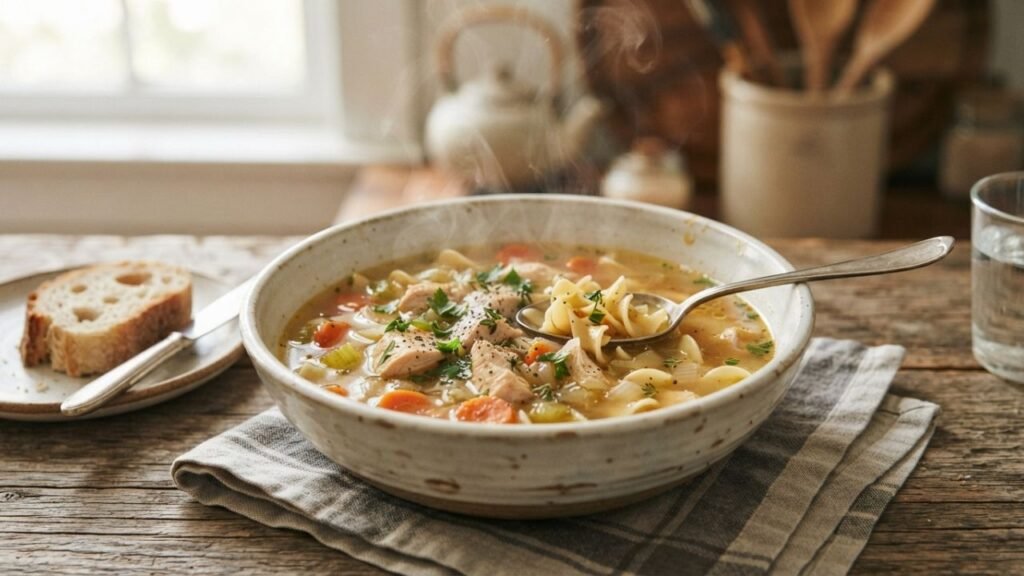
Serving Ideas
| Dish | How to Use the Stock |
|---|---|
| Soup | Use it as the main cooking liquid |
| Rice | Replace some or all of the water |
| Gravy | Combine with pan juices and a thickener |
| Pan sauce | Add it to browned bits left in the pan |
| Stew | Use it as part of the cooking liquid |
| Vegetables | Add a small amount while simmering |
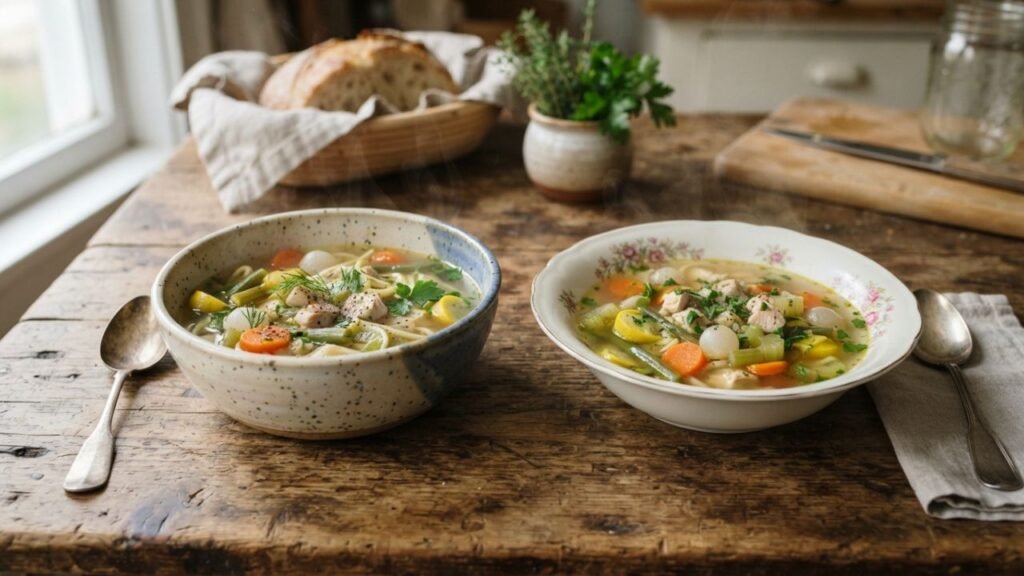
Because homemade stock is usually mild, it can fit into many different recipes without dominating the other ingredients.
Seasonal or Occasion Variations
Leftovers: Add stock to leftover chicken and vegetables for soup, mix it into rice or grains, or thin a thick sauce or gravy.
Spring & Summer: Use fresh parsley, thyme, and seasonal vegetables for light soups, rice dishes, or poached chicken.
Fall & Winter: Pair the stock with potatoes, beans, mushrooms, noodles, or shredded chicken for hearty soups and stews.
Holiday & Family Meals: Prepare the stock ahead and use it for gravy, soup, rice, or other dishes during busy meals.
Storage & Reheating Tips
When to Discard: Throw away stock if it develops mold, an unpleasant smell, unusual discoloration, or other clear signs of spoilage.
Refrigerating: Cool the stock safely, transfer it to clean airtight containers, and refrigerate at 40°F (4°C) or below. Use within 3–4 days.
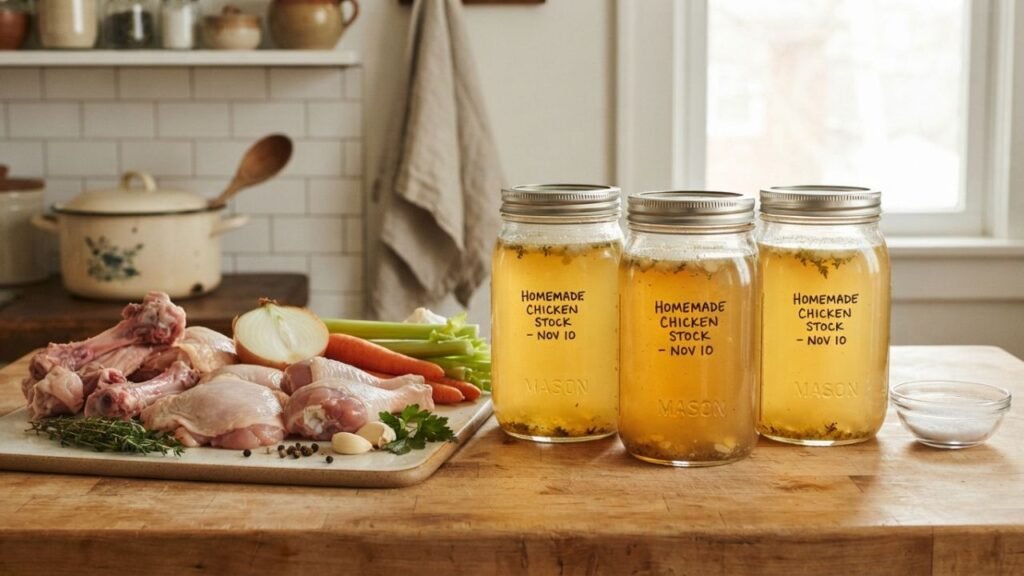
Freezing: Freeze cooled stock in freezer-safe containers, leaving space for expansion. Label each portion with the date.
Reheating: Thaw frozen stock in the refrigerator or heat it directly in a saucepan when appropriate. Reheat only the amount you plan to use.
For more information about safe storage and reheating of leftovers, follow the USDA’s Leftovers and Food Safety guidance.

Mistakes to Avoid
Avoid boiling the stock too hard, as vigorous cooking can make it cloudy. Keep the seasoning light because you can add salt later when using the stock. Use just enough water to cover the ingredients, and avoid too many strong herbs or spices that may overpower other recipes. Check the pot occasionally during cooking and store the finished stock properly by refrigerating or freezing it promptly.
Frequently Asked Questions
1. Can I Make Stock From Any chicken carcass?
You can make stock from most properly handled cooked chicken carcasses, including those from roasted or baked chicken. Carcasses with some remaining meat, skin, and connective tissue can provide additional flavor and body.
2. How Long Should I Cook Chicken Carcass Stock?
A cooked chicken carcass generally benefits from about three to four hours of gentle simmering. The exact time can vary depending on the amount of chicken and water, so use the aroma, color, and flavor of the stock as practical guides.
3. Should I Roast the Chicken Bones First?
If you are starting with raw bones, roasting them can create deeper browned flavors before simmering. With a carcass from an already roasted chicken, additional roasting is usually unnecessary unless you specifically want a darker, richer flavor.
4. Why Does Homemade Stock Become Jelly-Like?
Stock can become jelly-like when chilled because collagen from the chicken’s connective tissues has been converted into gelatin during cooking. This is a normal characteristic of a well-extracted stock and will disappear when the stock is heated.
5. Can I Make Chicken Stock Without Celery?
Yes, celery is helpful but not essential. You can make a flavorful stock using chicken bones, onion, carrot, herbs, and peppercorns, or replace celery with a small amount of leek or another mild aromatic vegetable.
6. How Should I Freeze Chicken Stock?
Freeze cooled stock in clean, airtight, freezer-safe containers and leave enough space for the liquid to expand. Dividing it into small portions makes it easier to thaw exactly what you need for soups, sauces, rice, and other meals.
Conclusion
Chicken carcass stock is an easy way to turn leftover chicken into a useful homemade ingredient for soups, rice, sauces, gravy, and stews. With a gentle simmer, simple aromatics, and proper storage, you can make a flavorful stock without complicated ingredients.
For a balanced meal, use the stock alongside vegetables, whole grains, lean proteins, and other nutritious foods. Its main value is as a versatile cooking base that adds flavor while helping make better use of leftover chicken.