
Biltong is more than a traditional dried meat snack; it can also add bold flavor, texture, and richness to everyday meals. Made by curing and air-drying meat with vinegar and spices, it works well in salads, grain bowls, sandwiches, soups, and quick skillet dishes. Its savory taste can make simple meals more satisfying without requiring complicated preparation.
Because biltong is already cured and ready to eat, it can be added to meals with minimal cooking. Thin slices pair especially well with fresh vegetables, grains, eggs, and other hearty ingredients, making it a convenient choice for quick lunches and snacks. Its strong flavor also means that a small amount can add plenty of character to a dish.
What is a biltong food recipes?
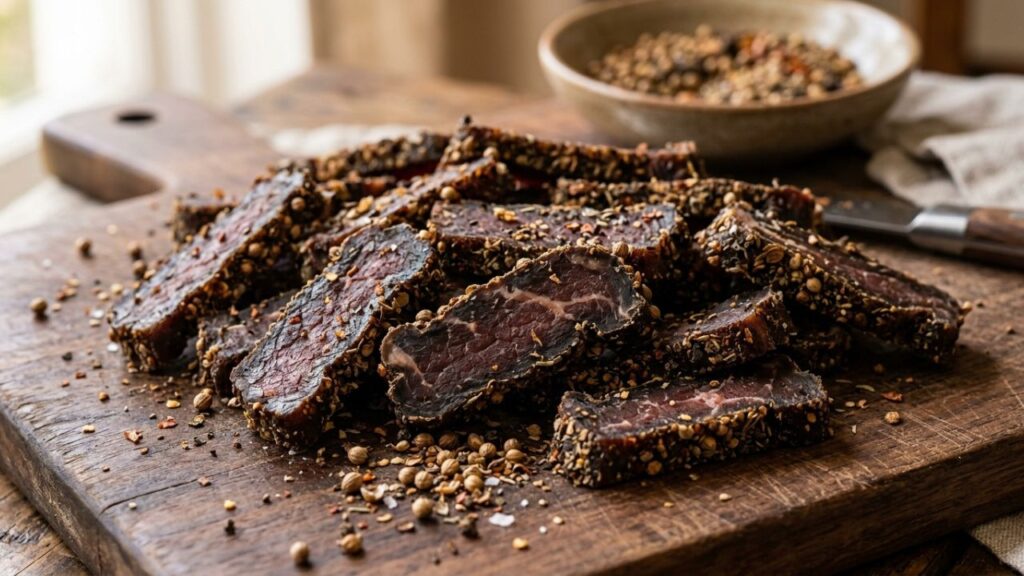
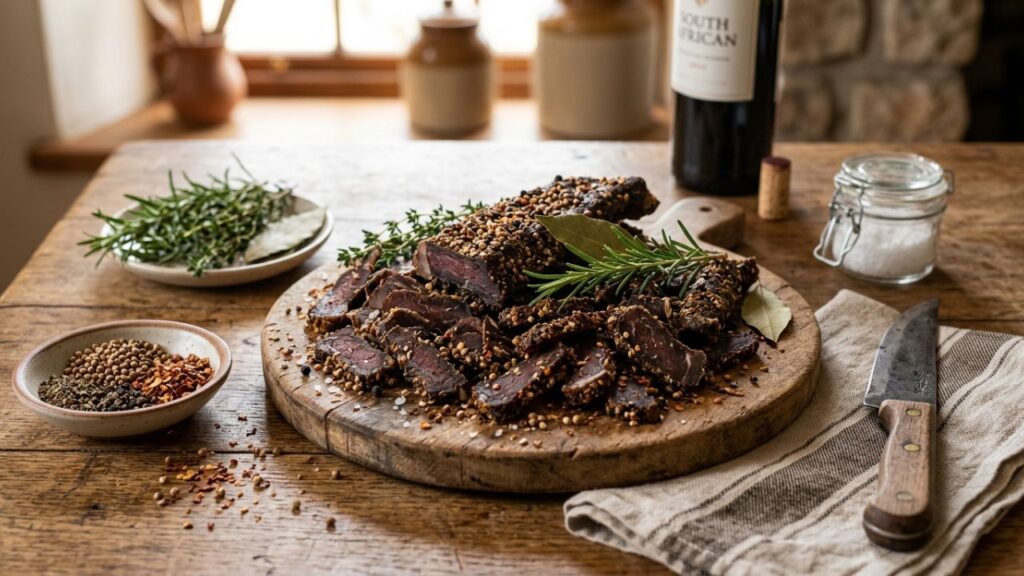
Biltong is a traditional Southern African dried meat made by curing beef with vinegar, salt, coriander, and black pepper before slowly air-drying it. The process gives biltong a rich, savory, slightly tangy flavor with a texture that can range from tender to firm and chewy. Because its flavor is concentrated, a small amount can add depth to salads, sandwiches, soups, wraps, and grain bowls. It can be enjoyed as a snack or used as a flavorful ingredient in everyday meals.
| Prep Time | Cook Time | Total Time | Servings |
|---|---|---|---|
| 10 minutes | 10 minutes | 20 minutes | 4 servings |
Ingredients
- 4 oz biltong, thinly sliced
- 1 tablespoon olive oil
- 2 cups cooked rice or whole grains
- 2 large eggs
- 1 cup chopped tomatoes
- ½ cup cucumber, diced
- ½ avocado, sliced
- ¼ cup fresh parsley, chopped
- ½ teaspoon black pepper
- 1 tablespoon lemon juice
Ingredient Alternatives
| Ingredient | Alternative |
|---|---|
| Biltong | Mild beef jerky or cured beef slices |
| Olive oil | Avocado oil |
| Cooked rice | Quinoa or barley |
| Eggs | Cooked chickpeas or beans |
| Tomatoes | Roasted red peppers |
| Cucumber | Zucchini |
| Avocado | Soft cooked vegetables |
| Fresh parsley | Fresh cilantro or mint |
| Black pepper | Mild paprika |
| Lemon juice | Lime juice |
Step-by-Step Cooking Method
Step 1
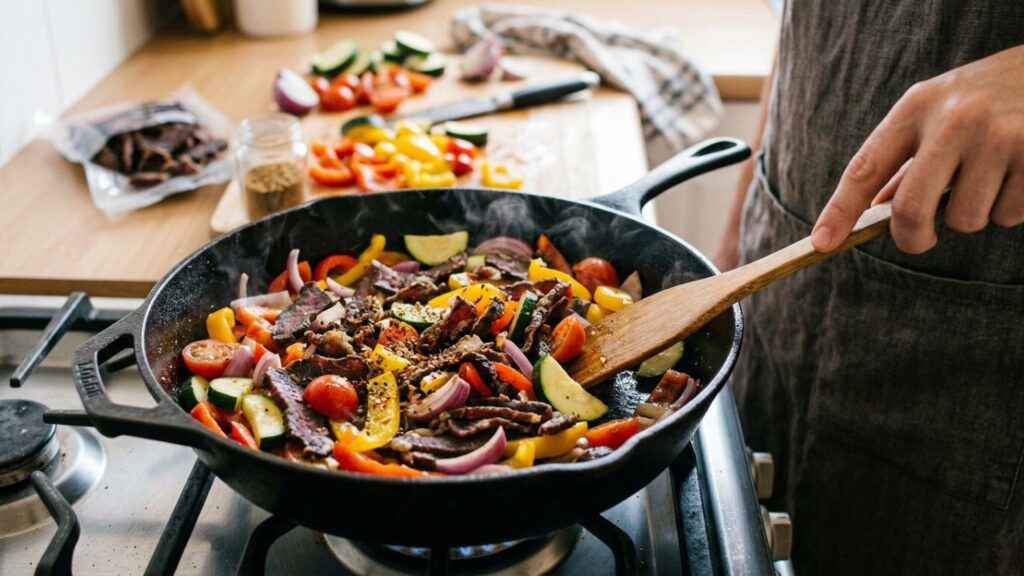
Slice the biltong, onions, peppers, and garlic into even pieces so the ingredients combine easily. Prepare the rice or potatoes ahead of time to keep the cooking process organized. For general meat preparation and food-safety practices, follow the USDA Food Safety Basics guidance.
Step 2
Heat olive oil in a pan over medium heat, then add the onions and peppers. Cook gently until they become soft and lightly golden, creating a flavorful base that balances the savory taste of the biltong.
Step 3
Add the sliced biltong near the end of cooking and warm it gently for a short time. Avoid prolonged heating because it can make the cured meat overly dry or tough while reducing its pleasant texture.
Step 4
Finish with fresh parsley, black pepper, and a small squeeze of lemon juice. Toss everything together and adjust the seasoning to taste before serving.
Step 5
Adapt the same method for breakfast bowls, wraps, salads, pasta, or grain dishes by changing the vegetables, grains, or sauces used alongside the biltong.
Serving Suggestions
| Serving Option | Best For |
|---|---|
| Fresh Side Dishes | Fresh salads, roasted vegetables, yogurt sauces, and grain bowls help balance biltong’s rich, savory flavor while adding freshness. |
| Casual Meal Presentation | Serve biltong meals in shallow bowls with fresh herbs for a simple, rustic presentation that works well for everyday dining. |
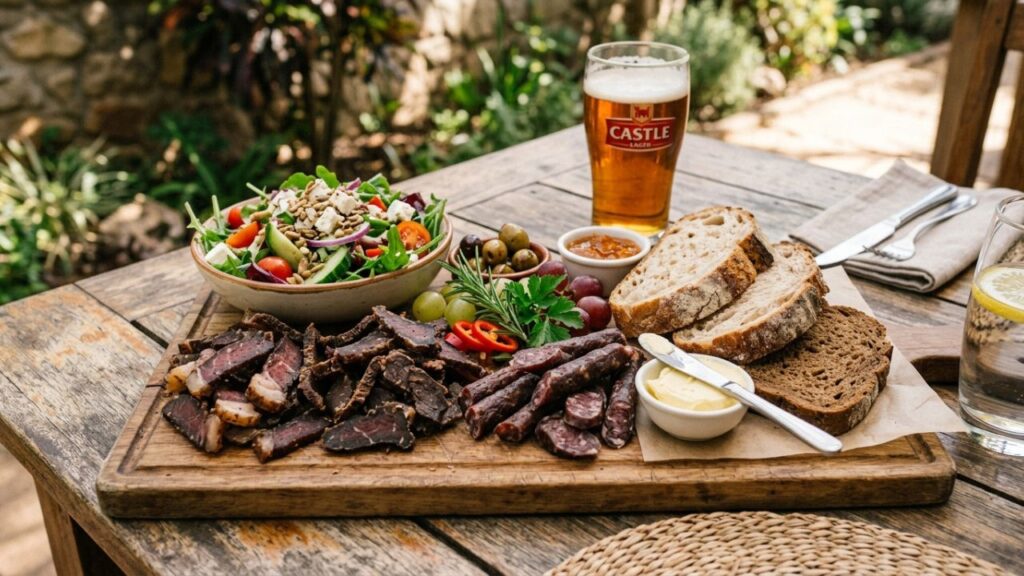
| Serving Biltong at Gatherings | Arrange biltong on a snack board with cheese, olives, crackers, dips, and fresh vegetables for easy sharing. |
| Smaller Household Portions | Use smaller amounts of biltong with grains, vegetables, or salads since its concentrated flavor can make a meal satisfying without large portions. |
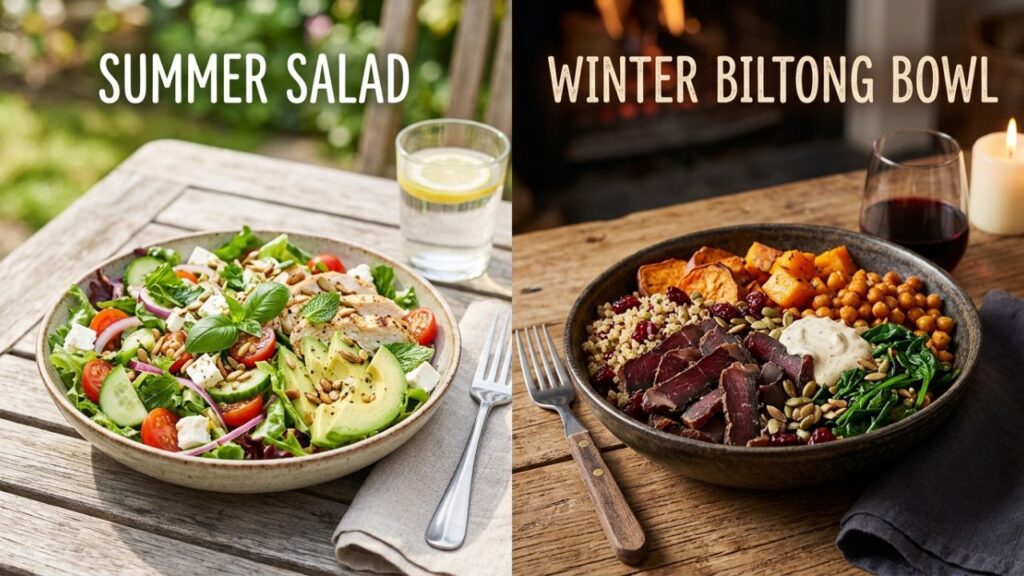
Seasonal or Occasion Variations
Creative Leftover Ideas: Turn leftover biltong meals into breakfast hashes, wraps, sandwiches, or soup toppings for quick and flavorful next-day meals.
Light Spring & Summer Meals: Pair biltong with fresh salads, avocado bowls, cucumber ribbons, and citrus dressings for bright and refreshing seasonal meals.
Comforting Fall & Winter Variations: Add biltong to potato dishes, soups, roasted vegetables, or warm grain bowls for richer and more comforting meals.
Casual Holiday Serving Ideas: Arrange biltong on a rustic appetizer board with bread, cheese, fresh herbs, and homemade dips for easy sharing.
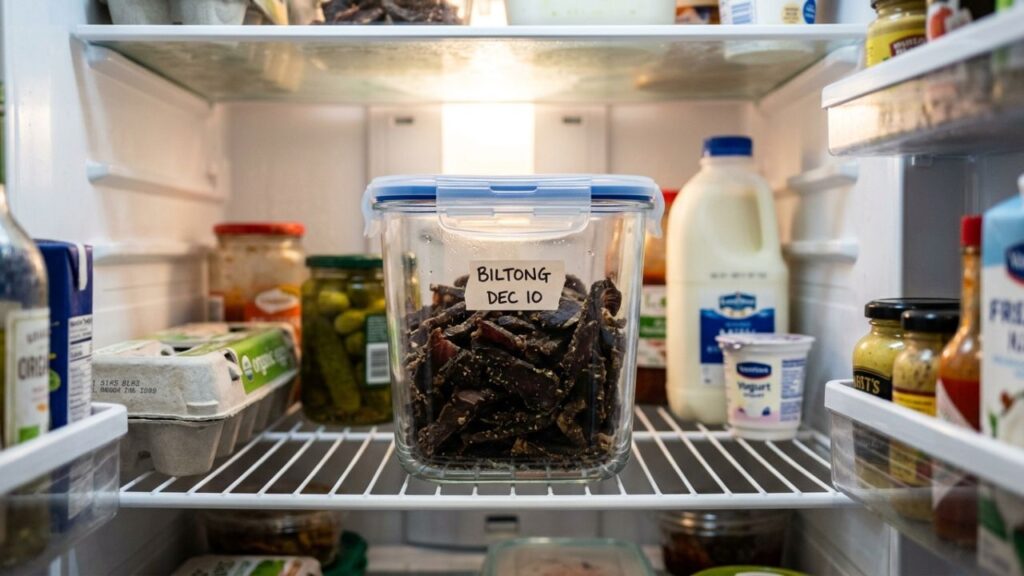
Storage & Reheating Tips
Food Safety: Use clean utensils and avoid leaving prepared meat dishes at room temperature for extended periods. For official storage and leftover guidance, follow the USDA Leftovers and Food Safety guidance.
Best Storage Methods: Store leftover biltong dishes in clean, airtight containers and keep them refrigerated. For the best quality, protect the meat from excess moisture and unnecessary exposure to air.
Refrigeration & Freezing: Refrigerate prepared dishes promptly and use them within a few days. For longer storage, suitable cooked portions can be frozen in airtight containers or freezer-safe bags.
Gentle Reheating: Reheat biltong dishes gently over low heat in a skillet, adding a small amount of moisture if needed. Avoid excessive heat, which can make the meat dry and chewy.
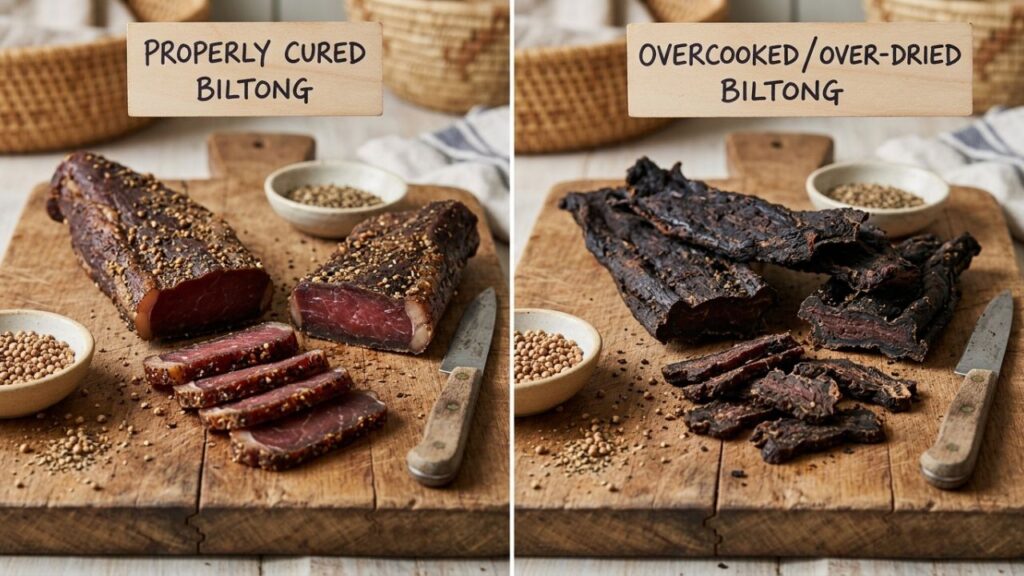
Common Mistakes to Avoid
Biltong can become dry and chewy if it is exposed to too much heat, so only warm it gently when needed. Since it is already cured and seasoned, adding too much salt can overpower the dish. Pairing it with fresh vegetables, herbs, lemon juice, or creamy sauces helps create a better balance of flavor and texture.
Frequently Asked Questions
1. Can Biltong Be Heated in Recipes?
Yes, biltong can be gently heated in soups, skillet meals, pasta, and grain bowls without losing its rich savory flavor. It is best added near the end of cooking so the texture stays tender instead of becoming too dry.
2. What Foods Pair Best With Biltong?
Fresh vegetables, roasted potatoes, rice, eggs, avocado, and grain bowls all pair beautifully with biltong’s deep savory taste. Light sauces and fresh herbs also help balance the richness of cured meat dishes.
3. Is Biltong Similar to Jerky?
Biltong and jerky are both dried meat products, but they are prepared differently using separate curing and drying methods. Biltong is usually air-dried with vinegar and spices, which gives it a softer texture and slightly tangy flavor.
4. How Long Does Homemade Biltong Last?
Homemade biltong can usually stay fresh for several days when stored in a cool and dry place with proper airflow. Refrigeration can help extend freshness even longer while maintaining better texture and flavor.
5. Can You Freeze Biltong?
Yes, biltong freezes well when stored in airtight containers or freezer-safe bags to protect it from excess moisture. Proper freezing helps preserve both the flavor and texture for longer storage periods.
6. What Sauces Work Well With Biltong?
Creamy yogurt sauces, garlic dressings, mustard-based dips, and herb sauces all complement biltong very naturally. Fresh and slightly tangy sauces work especially well because they balance the rich savory flavor.
Conclusion
Biltong food recipes offer a simple and flavorful way to bring protein-rich ingredients into everyday home cooking. When used thoughtfully in meals, biltong adds depth, texture, and savory balance that works well across salads, bowls, and warm dishes.