
Beef knuckle bones may look simple, but they are valued for making rich, flavorful homemade broth. As the bones simmer slowly, they release gelatin and develop a deep, savory taste that adds warmth and body to soups, stews, and other dishes. Their versatility makes them a useful ingredient for home cooks who enjoy preparing comforting meals from scratch.
In this guide, you’ll learn what makes beef knuckle bones useful in everyday cooking and how their broth can enhance a variety of meals. From hearty soups to flavorful grain dishes, this versatile broth can help bring depth and richness to your cooking while making weekly meal preparation more convenient.
What Are Beef Knuckle Bones?
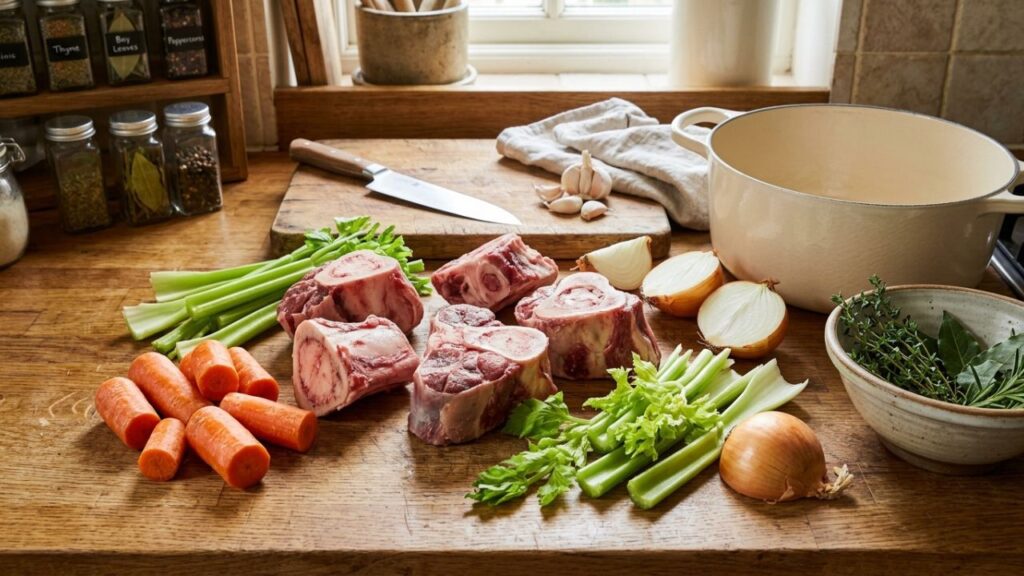
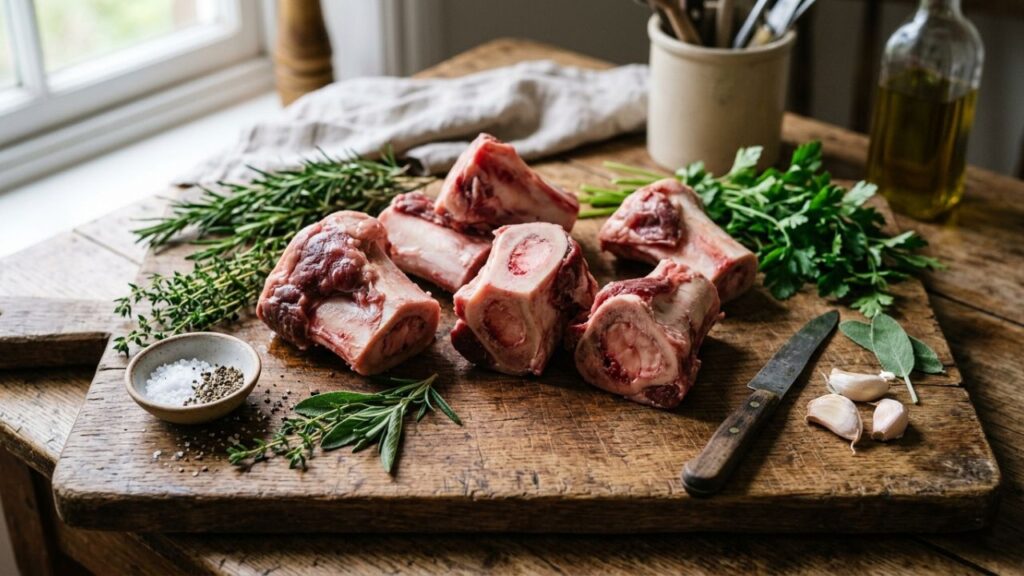
Beef knuckle bones are large, joint-rich bones valued for making flavorful homemade broth. They contain marrow and connective tissue that release gelatin during slow cooking, giving the broth a rich taste and smooth texture. Used in cuisines around the world, this broth is a popular base for soups, stews, sauces, and traditional dishes such as ramen and beef consommé. Its deep, savory flavor and versatility make beef knuckle bones a useful choice for preparing comforting meals at home.
Preparation Time
- Preparation time: 15 minutes
- Cooking time: 8–12 hours
- Total time: 8 hours 15 minutes to 12 hours 15 minutes
- Servings: 6–8 cups of broth
Ingredients
- 2–3 lb (900 g–1.4 kg) beef knuckle bones
- 1 large onion, quartered
- 2 carrots, roughly chopped
- 2 celery stalks, chopped
- 3 garlic cloves, crushed
- 2 bay leaves
- 3–4 sprigs fresh thyme or parsley
- 1 tablespoon apple cider vinegar (optional)
- 10–12 cups water, or enough to cover the bones
- Salt and black pepper, to taste
Alternative Ingredients
| Original Ingredient | Alternative Ingredient |
|---|---|
| Beef knuckle bones | Beef shank bones or beef neck bones |
| Onion | Leeks or extra celery |
| Carrots | Parsnips |
| Celery | Leeks |
| Fresh garlic | Garlic powder |
| Fresh thyme | Dried thyme or oregano |
| Fresh parsley | Dried parsley |
| Bay leaves | Omit if unavailable |
| Apple cider vinegar | White vinegar |
| Black pepper | White pepper |
| Water | Low-sodium beef broth, diluted if needed |
Step-by-Step Cooking Method
Step 1: Preheat the oven to 400°F (200°C). Arrange the beef knuckle bones on a baking tray and roast for 30–40 minutes until browned. This helps develop a deeper, richer flavor.
Step 2: Roughly chop the onion, carrots, and celery. Lightly sauté them in a large stockpot for 3–5 minutes to release their natural aroma. Add the crushed garlic if desired.
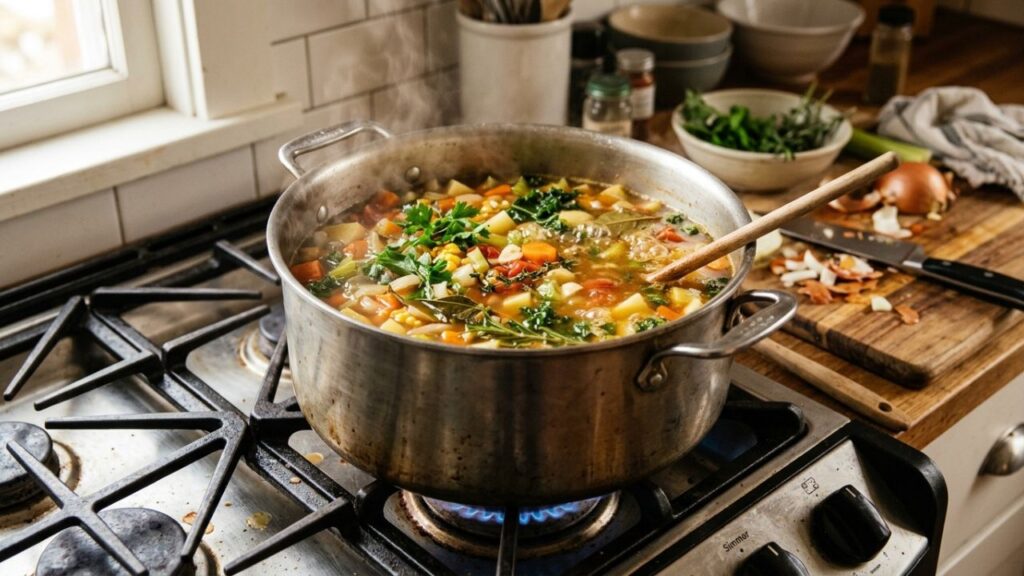
Step 3: Transfer the roasted bones to the pot and cover them with cold water. Bring the water to a gentle boil, then reduce the heat to maintain a low simmer. Skim off any foam that rises to the surface.
Step 4: Add the bay leaves, thyme, parsley, and optional apple cider vinegar. Simmer gently for 6–8 hours, adding water if needed to keep the bones covered. For additional food-safety guidance, consult the USDA Food Safety and Inspection Service .
Step 5: Strain the broth through a fine-mesh sieve and discard the bones and vegetables. Cool the broth promptly in shallow containers, then refrigerate or freeze it in portions for future meals.
Step 6: Refrigerate the broth for 3–4 days or freeze it for longer storage. Reheat leftovers to 165°F (74°C) before serving, and enjoy the broth in soups, stews, or other dishes.
Serving Healthy Beef Knuckle Broth
| Serving Option | Best For |
|---|---|
| Whole grains | Adding fiber and making the broth more filling. |
| Fresh vegetables | Providing color, texture, and additional nutrients. |
| Lean proteins | Creating a more balanced and satisfying meal. |
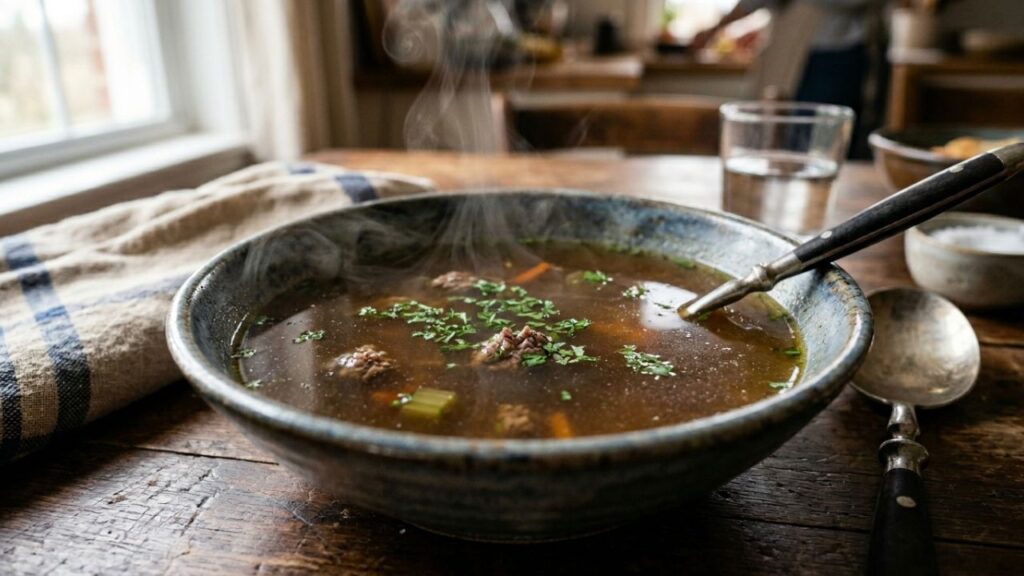
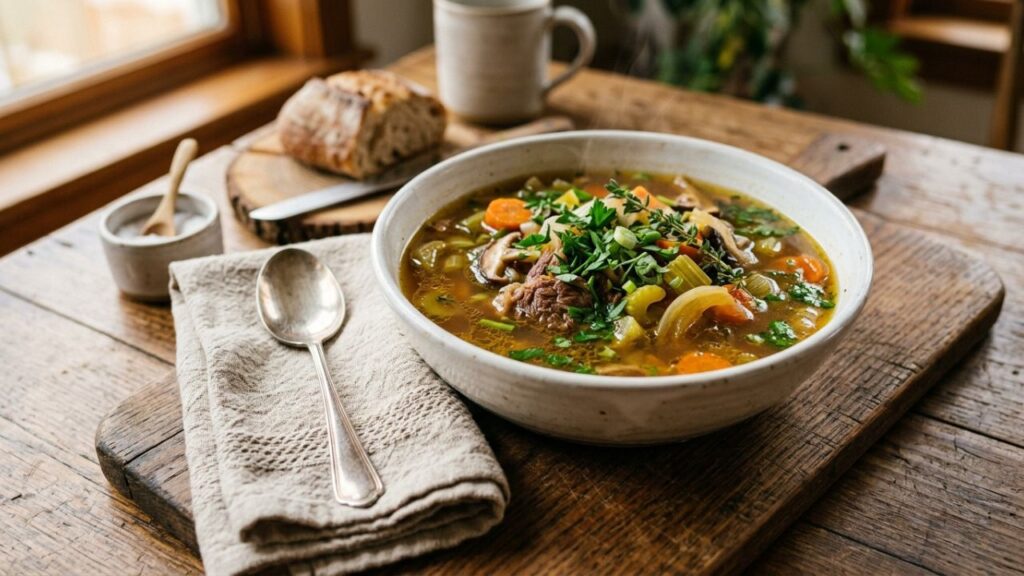
| Clear soup bowls | Showcasing the broth’s golden color and silky texture. |
| Small serving cups | Serving warm broth at gatherings or as a light starter. |
| Fresh parsley or thyme | Adding fresh aroma and herbal flavor. |
| Lemon juice | Bringing a bright, refreshing taste to the broth. |
| Black pepper | Enhancing the savory flavor with mild spice. |
| Cooked rice or grains | Turning the broth into a heartier meal. |
| A drizzle of olive oil | Adding richness and a smooth finish. |
Seasonal and Occasion Variations
Everyday Meals: Use beef knuckle broth to add savory flavor to vegetables, rice, and homemade stews.
Spring and Summer: Add fresh basil, tarragon, zucchini, or spinach for a lighter, refreshing broth.
Fall and Winter: Include parsnips, turnips, and carrots to create a hearty broth with natural sweetness.
Holidays and Special Occasions: Roast the bones with garlic and onions for a deeper flavor, then use the broth in sauces, gravies, or festive meals.
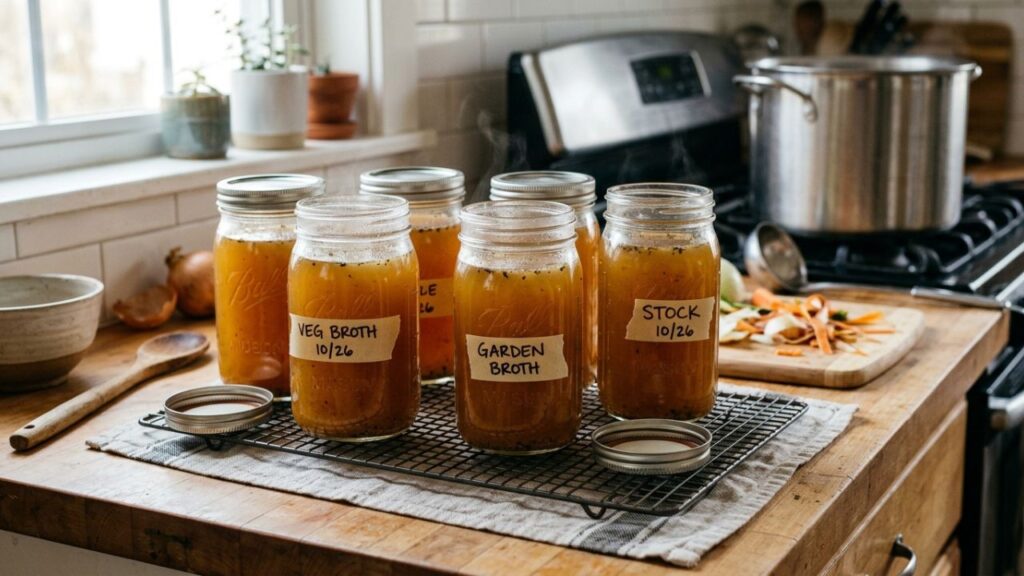
Meal Prep and Leftovers: Freeze broth in small portions for convenient use in risotto, soups, sauces, and cooked grains.
Storing and Reheating Beef Knuckle Bone Broth
Official Guidance: Follow the USDA Leftovers and Food Safety Guide for safe storage and reheating recommendations.
Refrigeration: Store broth in airtight containers and refrigerate within 2 hours of cooking. Use within 3–4 days for best food safety.
Freezing: Freeze broth in freezer-safe containers or ice cube trays for convenient portions. Use within 2–3 months for the best quality.
Reheating: Warm broth on the stove over medium heat until steaming hot, stirring occasionally.
Food Safety: Cool broth quickly in shallow containers before refrigerating, and avoid leaving it at room temperature for extended periods.
Common Mistakes to Avoid
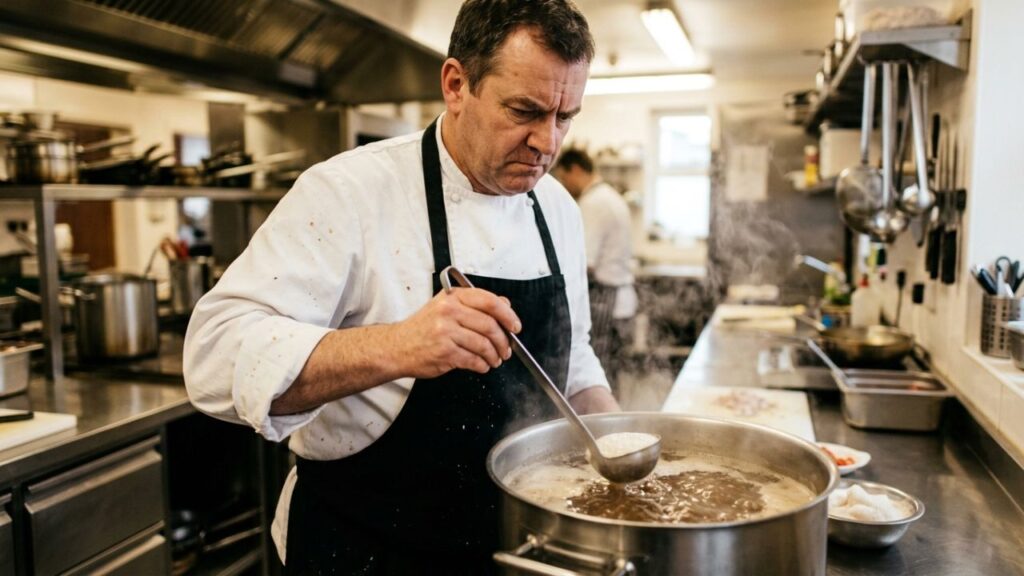
To make flavorful beef knuckle bone broth, simmer the bones gently for 6–8 hours and avoid excessive heat. Skim off foam regularly to maintain a smooth, clear texture. Add salt toward the end to prevent over-seasoning, and strain the broth carefully before storing. Refrigerate leftovers within two hours to keep the broth safe and fresh.
Frequently Asked Questions
1. Can I Use Frozen Knuckle Bones?
Yes, frozen knuckle bones work perfectly for broth. You can add them directly to cold water, or let them thaw slightly first. Just make sure to adjust simmering time slightly if they are still partially frozen to extract maximum flavor and nutrients.
2. How Long Should I Simmer?
Simmering for 6–8 hours is ideal to extract collagen, gelatin, and minerals. Shorter cooking will produce a lighter, less flavorful broth, while simmering too long can break down delicate textures. Gentle, low heat ensures the best balance of flavor and nutrition.
3. Do I Need to Roast the Bones?
Roasting is optional but highly recommended for deeper flavor. It caramelizes the marrow and adds a rich, golden color to the broth. If you skip roasting, you’ll still get a nutritious broth, but the taste will be milder and less complex.
4. Can I Use a Slow Cooker?
Absolutely! A slow cooker is perfect for hands-off simmering. Cook on low for 8–12 hours to extract the full nutrients from the bones. The slow, gentle heat helps the broth develop depth and silky texture without constant attention.
5. How Do I Remove Excess Fat?
Chill the broth in the fridge until the fat solidifies, then skim it off carefully. You can also use a fat separator while pouring. Removing excess fat creates a cleaner, lighter broth while keeping the flavor and nutrients intact.
6. When Should Vegetables Be Added?
Delicate herbs and quick-cooking vegetables should be added during the last hour of simmering. This prevents them from overcooking and losing flavor or nutrients. Heartier vegetables like carrots or celery can go in at the beginning to enhance richness.
Conclusion
Beef knuckle bone broth is a nourishing and versatile foundation for home cooks looking to create flavorful, healthful meals. By slowly simmering quality bones, incorporating fresh vegetables and herbs, and paying attention to balance and seasoning, you can turn a simple batch of broth into multiple wholesome dishes throughout the week. Thoughtful cooking and patience make the process as satisfying as the rich, golden broth itself.