
Chicken necks are a traditional and budget-friendly ingredient that can add deep, savory flavor to homemade meals. They are especially useful in soups, stews, gravies, and slow-cooked dishes, where gentle cooking allows their natural richness to develop. Although they may be less commonly used today, they remain a practical choice for creating comforting meals with simple cooking techniques.
With the right preparation and enough cooking time, chicken necks can produce a flavorful broth and tender texture that works well in many everyday dishes. Their versatility makes them suitable for both simple family meals and hearty comfort food, while slow simmering helps bring out their full savory character.
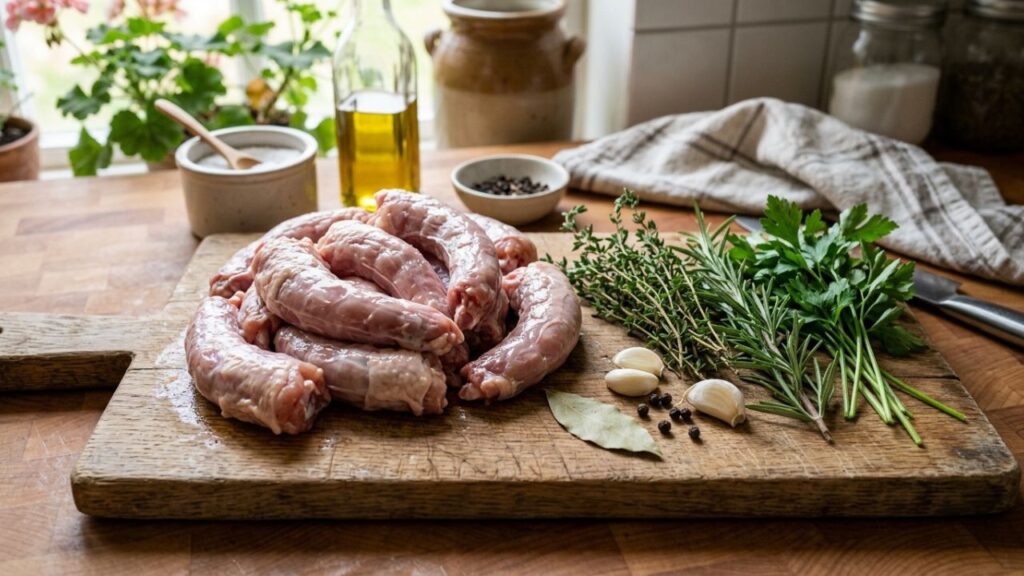
What Are Chicken Necks?
Chicken necks are a bone-in part of the chicken that contains less meat than larger cuts but provides rich flavor when cooked slowly. They are commonly used in soups, broths, stews, and gravies because the bones and connective tissue contribute depth and a naturally satisfying texture. With herbs, vegetables, and gentle simmering, chicken necks can create a comforting homemade dish with a savory flavor that works well in many traditional cuisines.
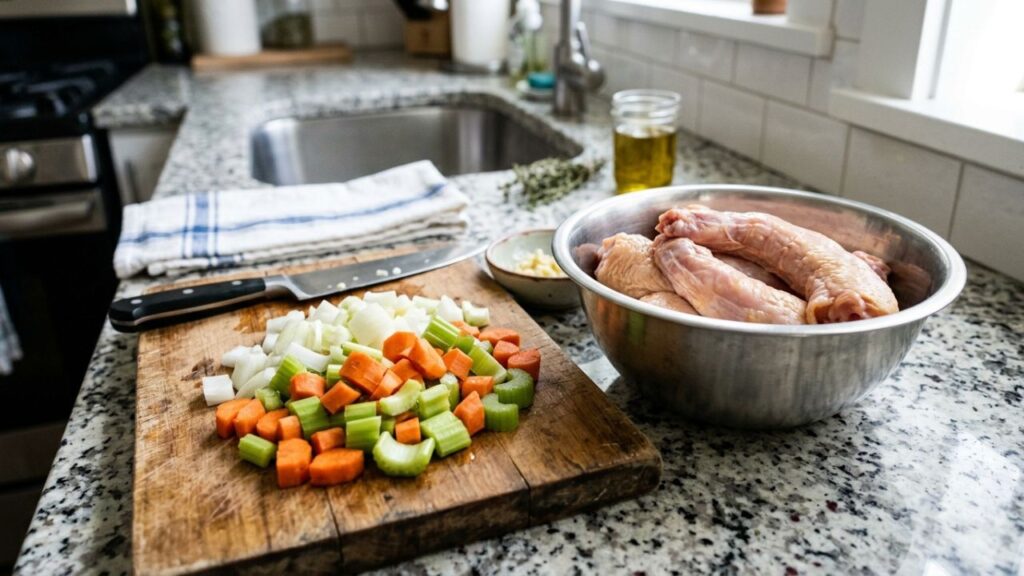
Ingredients Guide for Chicken Necks
Prep Time: 15 minutes
Cook Time: 1 hour 30 minutes
Total Time: 1 hour 45 minutes
Servings: 4 servings
Ingredients
- 2 lb chicken necks
- 1 medium onion, chopped
- 2 cloves garlic, minced
- 1 carrot, sliced
- 1 celery stalk, chopped
- 1 teaspoon dried thyme
- 2 bay leaves
- ½ teaspoon black pepper
- 1 tablespoon tomato paste
- 4 cups water or low-sodium chicken broth
- 1 tablespoon cooking oil
Ingredient Alternatives
| Ingredient | Alternative |
|---|---|
| Chicken necks | Chicken backs or wings |
| Onion | Shallots |
| Garlic | Garlic powder |
| Carrot | Parsnip |
| Celery | Bell pepper |
| Thyme | Rosemary or oregano |
| Bay leaves | Dried Italian herbs |
| Black pepper | White pepper |
| Tomato paste | Fresh tomato purée |
| Chicken broth | Water or homemade unsalted broth |
| Cooking oil | Olive oil or avocado oil |

Step-by-Step Cooking Method
Step 1
Heat a large, heavy-bottomed pot over medium heat and add a small amount of cooking oil. Place the chicken necks in the pot and brown them slowly on all sides until they develop a deep golden color. This creates a richer base for the broth and adds more depth to the final dish.
Step 2
Add the onions, garlic, celery, and carrots to the browned chicken necks. Cook the vegetables until they soften and the onions become lightly golden. Stir in the tomato paste and seasonings, then add the broth or water while gently scraping the bottom of the pot to incorporate the browned bits.
Step 3
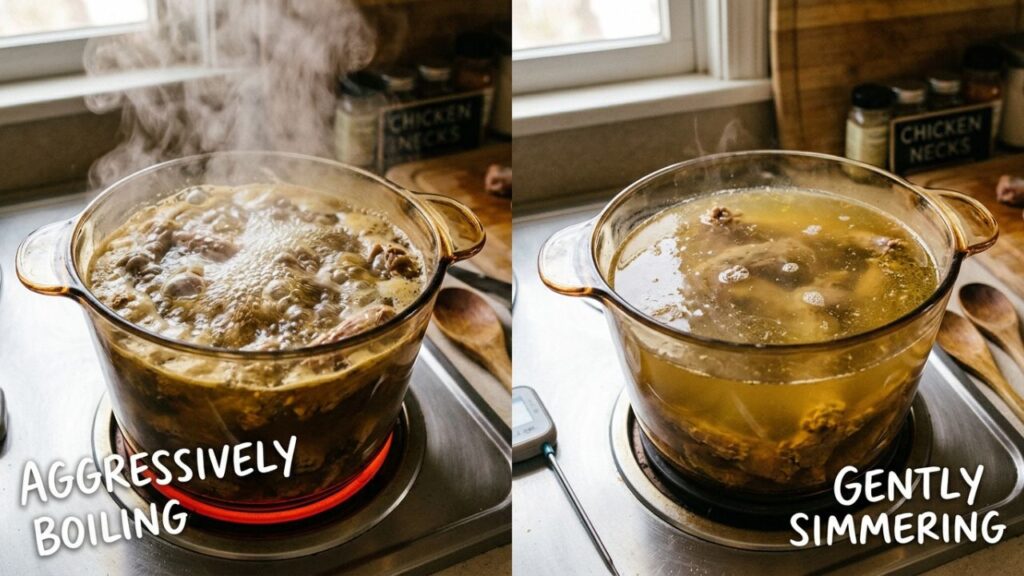
Bring the mixture to a gentle simmer rather than a rapid boil. Partially cover the pot and cook for about 1½ to 2 hours, allowing the connective tissue to soften and the broth to develop a rich flavor. The chicken necks are ready when the meat becomes tender and pulls away from the bone easily.
Step 4
Taste the broth near the end of cooking and adjust the seasoning as needed. Make sure the chicken reaches a safe internal temperature before serving; the USDA recommends that all poultry reach 165°F (73.9°C) when measured with a food thermometer. See {“fallbackMarkdown”:”USDA’s official poultry cooking temperature guidance
Step 5
If the broth is too thin, simmer it uncovered for a few additional minutes to reduce it slightly. You can also add potatoes, peppers, or noodles toward the end for a heartier one-pot meal.
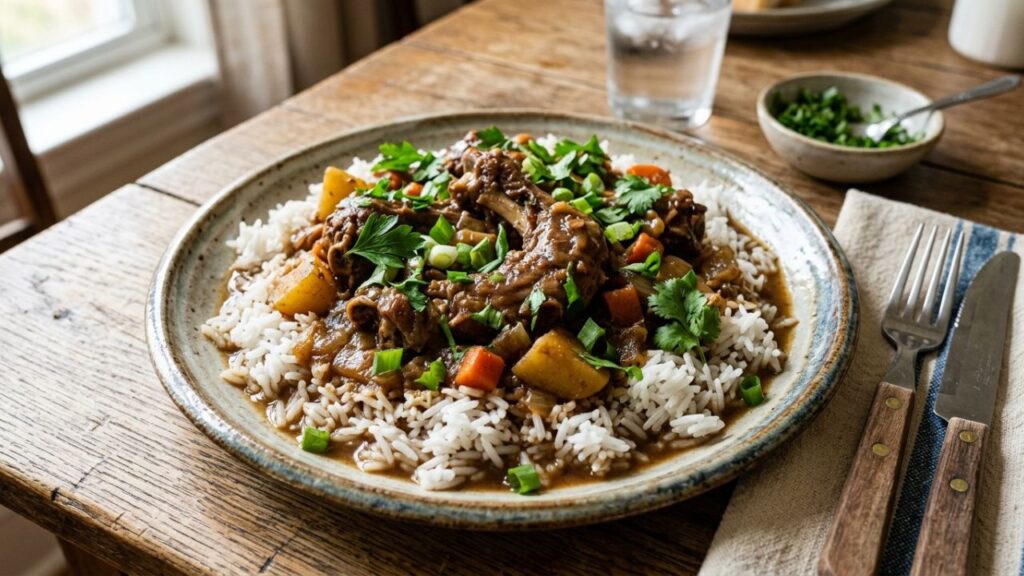
Serving Suggestions
| Side Dish | Best For |
|---|---|
| Warm rice | A filling option that absorbs the rich broth and savory flavors beautifully. |
| Mashed potatoes | A soft and comforting side that pairs well with the tender chicken. |
| Buttered noodles | A simple, hearty choice that complements the flavorful broth. |
| Roasted vegetables | A lighter option that balances the richness of the dish. |
| Crusty bread | Perfect for soaking up the warm, flavorful broth. |
| Fresh herbs | Parsley or green onions add a fresh contrast and bright finishing touch. |
| Rice bowls | A practical way to turn leftover chicken and broth into another satisfying meal. |
| Noodle soup | A creative option for using leftovers in a warm and comforting dish. |
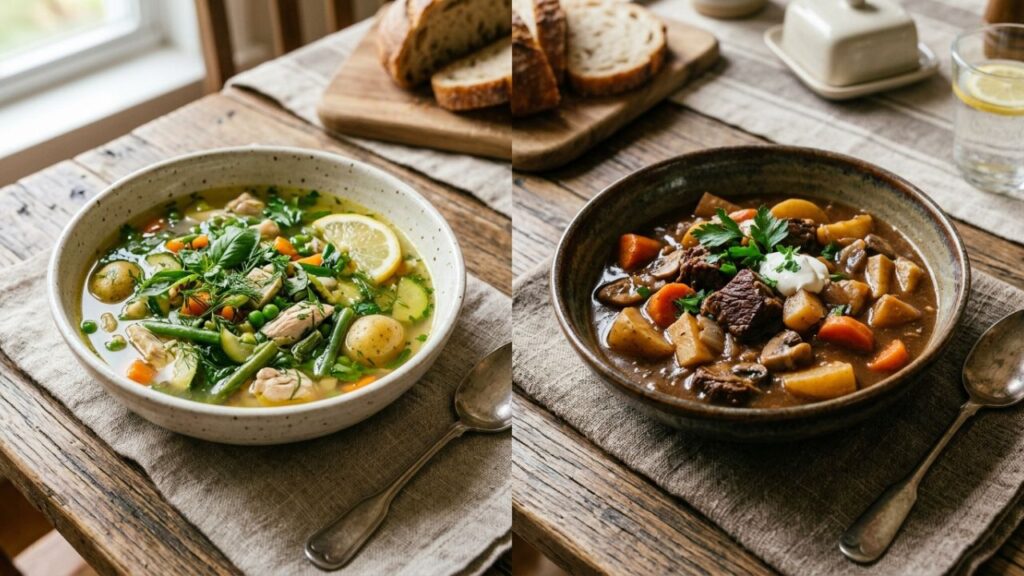
Seasonal Variations for Homemade Meals
Refreshing Leftovers: Add extra vegetables or noodles to leftover chicken necks and broth to create a new soup. You can also adjust the seasonings and turn the leftovers into a quick, hearty stew.
Spring and Summer: Add fresh parsley, cilantro, or green onions to brighten the broth. A small squeeze of lemon juice can also provide a fresh finish and balance the richness.
Fall and Winter: Include potatoes, carrots, smoked paprika, or a thicker broth to create a warmer and more filling meal. These ingredients work especially well for cozy cold-weather dinners.
Holiday and Family Dinners: Serve chicken necks with rice, bread, or stuffing-style sides. The flavorful broth can also be used as a base for homemade gravy.
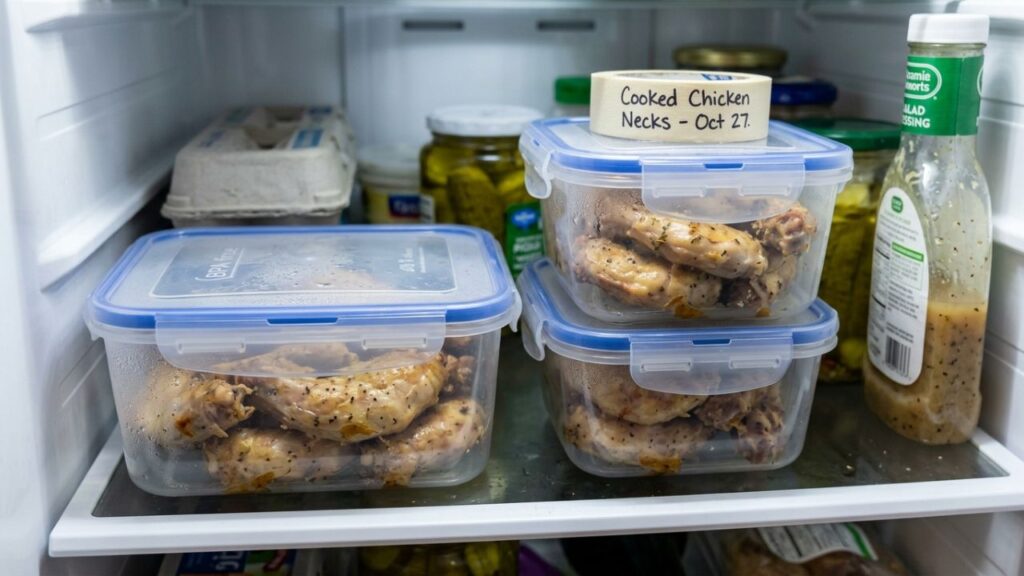
Storage and Reheating Tips
Food Safety Guidance: Reheat leftovers thoroughly until they are hot throughout, especially when reheating frozen portions. Avoid repeatedly reheating the same portion to help maintain quality and safe handling.
Proper Refrigeration: After cooking, transfer the chicken necks and broth into airtight containers once they have cooled appropriately. Refrigerate and use within 3–4 days. For safe storage practices, follow USDA’s Leftovers and Food Safety guidance.
Freezing for Longer Storage: Divide the chicken necks into smaller portions and place them in freezer-safe containers or sealed bags. Label them with the date and use within about 3 months for best quality.
Best Reheating Technique: Reheat slowly on the stovetop over low to medium heat, stirring gently when needed. Avoid aggressive boiling because it can affect the texture of the meat and broth.
Common Cooking Mistakes to Avoid
Avoid using high heat throughout the cooking process, as it can make the chicken necks tough and prevent the broth from developing properly. Skipping the browning step can also result in a weaker flavor, while overcrowding the pot may stop the chicken from browning evenly. Use gentle heat, season gradually, and give the chicken enough space to cook for a richer and more satisfying result.
Frequently Asked Questions
1. How Long Should Chicken Necks Cook?
Chicken necks usually need about one and a half to two hours of gentle simmering to become fully tender. Slow cooking allows the connective tissue to soften properly while helping the broth develop a richer and smoother texture. Cooking them too quickly over high heat may leave the meat slightly tough.
2. Can Chicken Necks Be Cooked in a Slow Cooker?
Yes, chicken necks work very well in a slow cooker because low heat helps develop deeper flavor over time. Most recipes cook best on low heat for six to eight hours, allowing the broth to become rich while keeping the meat tender and moist throughout the cooking process.
3. Do Chicken Necks Make Good Broth?
Chicken necks are excellent for homemade broth because the bones and connective tissue release natural gelatin during simmering. This creates broth with a fuller body, deeper flavor, and smooth texture that works especially well in soups, gravies, and comforting homemade meals.
4. Can Cooked Chicken Necks Be Frozen?
Cooked chicken necks can be frozen successfully for several months when stored properly in airtight freezer-safe containers. Allow the dish to cool completely before freezing so the texture and flavor remain as fresh as possible after reheating later.
5. What Sides Pair Best With Chicken Necks?
Chicken necks pair especially well with comforting side dishes such as rice, mashed potatoes, buttered noodles, roasted vegetables, or warm bread. These sides absorb the rich broth nicely and help create a balanced, filling homemade meal suitable for family dinners.
6. Why Are My Chicken Necks Tough?
Tough chicken necks usually mean they need additional cooking time. Gentle simmering over low heat helps break down connective tissue slowly, which creates softer meat and smoother broth. Rapid boiling or rushing the cooking process can prevent the texture from becoming fully tender.
Conclusion
Chicken necks can be a simple yet satisfying addition to home-cooked meals when they are prepared with care and balanced ingredients. Slow cooking with fresh vegetables, light seasoning, and gentle simmering helps bring out their natural flavor while keeping the dish wholesome and comforting for everyday eating.